
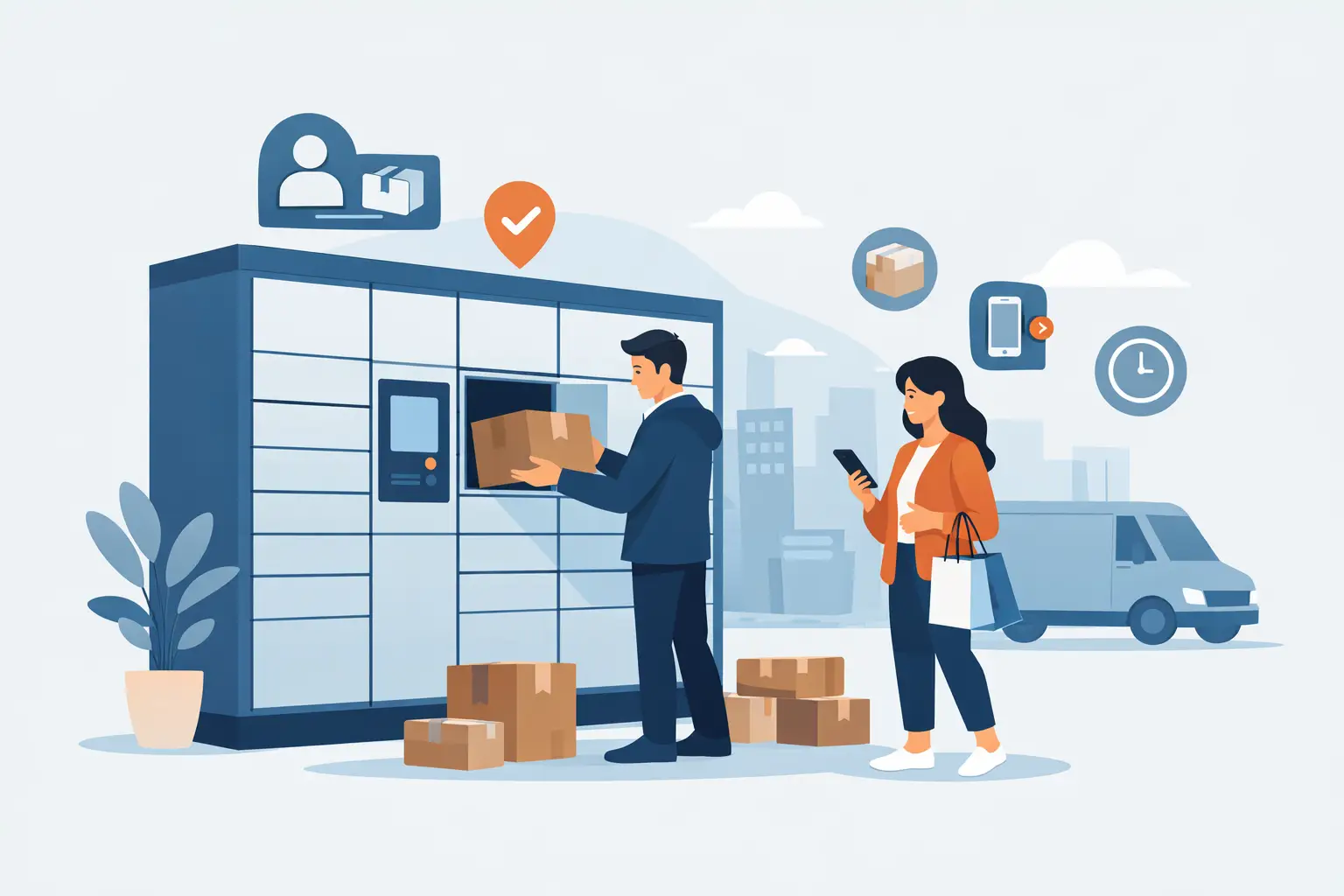
A failed delivery does more than delay a parcel. It creates extra handling, repeat delivery attempts, customer complaints, and avoidable cost on both sides of the transaction. That is why a parcel self collection service has become more than a convenience feature. For many sellers and logistics operators, it is now a practical part of running a more reliable delivery model.
For e-commerce merchants, retail operators, and fulfillment partners, the appeal is simple. Customers want flexibility. Businesses want fewer failed drops and better control over last-mile operations. A collection-based model sits in the middle and solves both problems when it is set up properly.
What a parcel self collection service actually does
At its core, a parcel self collection service allows buyers or recipients to collect their parcels from a designated location instead of waiting at home for a courier. That location might be a retail outlet, service point, pickup station, or partner store operating within a logistics network.
This sounds straightforward, but the business impact is wider than it first appears. Self-collection changes delivery from a one-attempt home drop into a managed handover point. That gives sellers more delivery certainty, gives customers more control over timing, and gives network operators a way to consolidate parcel volume into accessible neighborhood locations.
For the customer, the value is convenience. For the merchant, the value is fewer exceptions. For the station or retail partner, the value can include added traffic and service revenue. When all three benefits line up, the model becomes commercially strong.
Why parcel self collection service demand is growing
Consumer buying habits have changed faster than delivery habits in many markets. People order more often, but they are not always available to receive parcels during standard delivery windows. That mismatch creates friction.
A parcel self collection service works because it fits around real schedules. Office workers can collect after work. Students can collect near campus. Small business owners can send team members to pick up orders when convenient. In dense urban areas, this often makes more sense than repeated doorstep attempts.
There is also a trust factor. Some customers are more comfortable collecting from a known retail point than leaving parcels unattended or coordinating complicated handovers. This matters even more for higher-value items, documents, or time-sensitive orders.
From an operations perspective, collection points can help smooth out delivery volume. Instead of routing individual parcels across many addresses with inconsistent success rates, logistics teams can move grouped parcels to selected points. That often improves route efficiency, especially in areas where failed deliveries are common.
The real business benefits for sellers and operators
For online sellers, missed delivery is rarely just a courier issue. It affects customer satisfaction, return rates, support tickets, and brand perception. A parcel that arrives late because no one was home can still become the seller's problem.
A parcel self collection service reduces that risk by setting a clear collection path from the start. Customers know where the parcel is going, when it is ready, and what they need to do next. That lowers confusion and cuts the back-and-forth that often happens after a failed home delivery.
Cost efficiency is another advantage, although it depends on the network and parcel profile. Consolidated deliveries to pickup points may reduce last-mile inefficiency, especially for lower-margin e-commerce orders. Not every business will see the same savings, but for merchants handling frequent residential shipments, the model can be commercially attractive.
There is also a customer experience benefit that is easy to underestimate. Flexibility can be a selling point. Some buyers actively prefer pickup because it gives them more control. When merchants offer that option at checkout, they are not only solving a logistics problem. They are improving purchase confidence.
Where the model works best
Not every parcel and not every customer is a perfect fit for self-collection. The service tends to work best when collection points are easy to reach, operating hours are practical, and customers receive clear pickup instructions.
Urban and suburban areas usually benefit the most because pickup locations can be placed closer to residential and commercial traffic. Markets with strong convenience store culture or neighborhood service outlets are also well suited to this model. Customers are already used to visiting local points for payments, top-ups, or basic services, so parcel collection feels like a natural extension.
For businesses, the strongest use cases often include marketplace sellers, social commerce merchants, subscription-based deliveries, and retailers managing omnichannel orders. It can also work well for businesses receiving inbound stock or documents when direct premises delivery is not always practical.
The weaker fit tends to be oversized items, fragile goods needing special handling, or customers who are far from pickup access. That does not make the model ineffective. It simply means self-collection works best as one delivery option within a broader logistics setup, not as a one-size-fits-all replacement.
What makes a parcel self collection service reliable
The idea is simple, but execution matters. A parcel self collection service only works well when the process is clear from dispatch to handover.
First, location quality matters more than network size alone. A large number of pickup points looks good on paper, but if they are poorly placed or inconvenient to access, usage will stay limited. Good pickup points should be close to where people already live, work, or shop.
Second, notification accuracy is essential. Customers need timely updates when a parcel is ready, along with collection hours, verification requirements, and storage deadlines. Most service failures in collection models come from communication gaps rather than the pickup process itself.
Third, retail or station partners need workable operating procedures. Parcels must be received, stored, verified, and released consistently. If outlet staff are unclear on process, the customer experience deteriorates quickly. This is where a tech-enabled system and standardized operations make a real difference.
Fourth, storage discipline matters. Pickup points are not warehouses. If parcel dwell time is not managed properly, outlets run out of space, items become harder to locate, and handovers slow down. A good network balances accessibility with practical storage rules.
Why retail-based collection points create added value
One of the strongest versions of this model uses local retail outlets as collection stations. This approach is operationally practical because it places logistics services inside existing neighborhood businesses rather than relying only on dedicated courier branches.
That creates a dual benefit. Customers gain easier access to parcel services, while retail operators can add another service line that brings foot traffic and incremental revenue. In the right setup, parcel collection is not just a delivery feature. It becomes part of a local business ecosystem.
This is especially relevant for entrepreneurs and shop owners looking to maximize their premises. A collection point can help turn unused counter space into a service asset. The commercial value depends on parcel volume, local demand, and support systems, but the model is attractive because it builds on infrastructure that already exists.
For a logistics network, this also improves reach without the same cost profile as opening standalone branches. That is one reason brands like iExpress are building service models around station networks supported by digital tools rather than relying on a traditional branch-only approach.
Choosing the right service partner
If you are evaluating a parcel self collection service for your business, the right question is not simply whether pickup is available. The better question is whether the operator can deliver it consistently at scale.
Look at coverage, but also look at process control. How are parcels checked in? How are customers notified? What is the exception handling process if a parcel is delayed, uncollected, or sent to the wrong point? These details shape the real customer experience.
You should also consider whether the service fits your broader operations. If you are an online seller, does the collection option integrate well with your fulfillment workflow? If you are a retail operator, is the station model practical for your store team? If you are growing volume, can the network support expansion without creating service bottlenecks?
The strongest partners are not just moving parcels. They are helping businesses reduce friction, improve delivery outcomes, and create a model customers will actually use.
A good parcel service should not force customers into one rigid delivery pattern. It should give them options that fit real life, while giving businesses a more dependable way to complete the last mile. That is why self-collection keeps gaining ground - not because it replaces delivery, but because it makes delivery work better.