
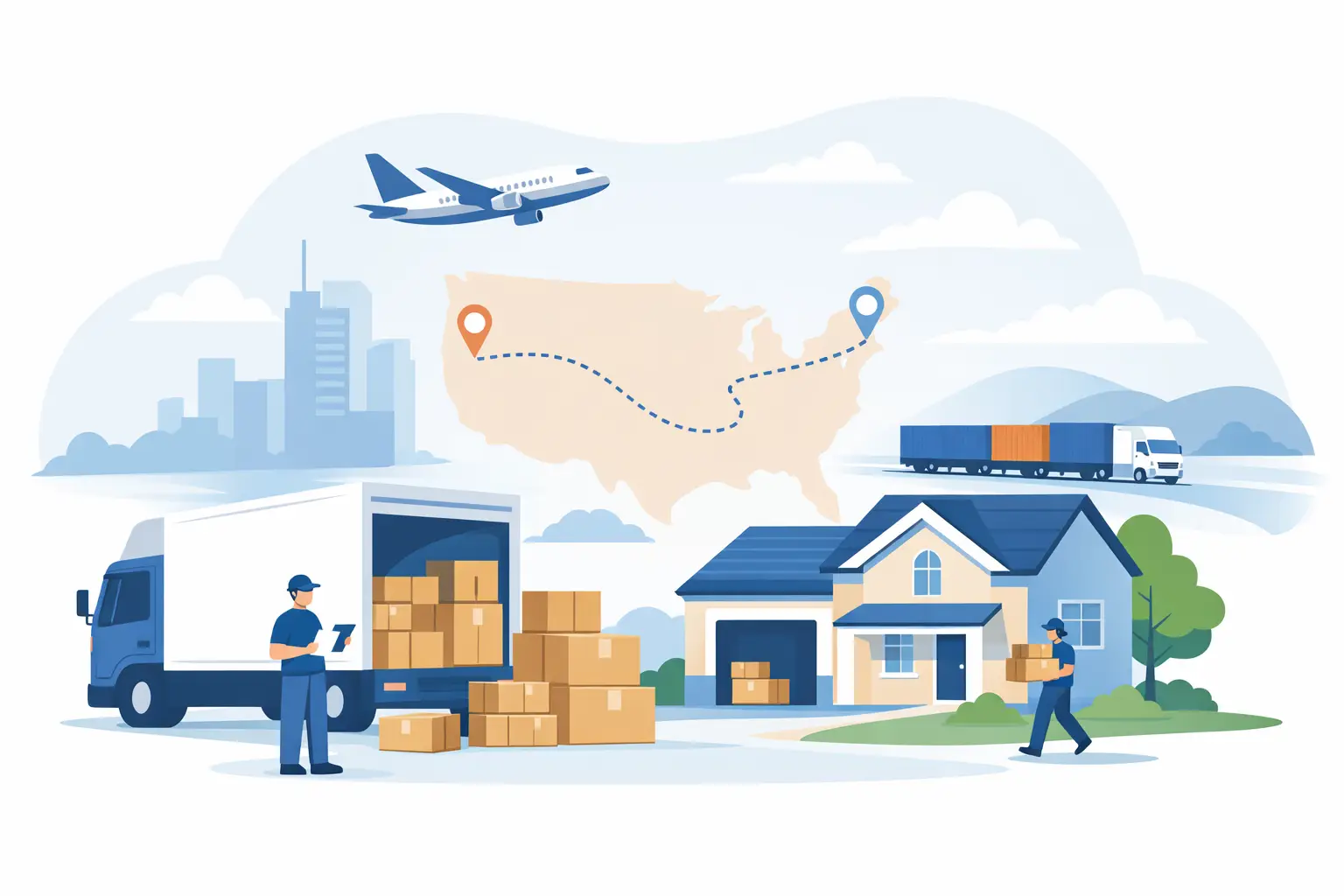
A customer places an order at 10:15 a.m. By noon, they are already asking when it will arrive. For online sellers and growing businesses, that question sits at the center of daily operations. So, what is domestic shipping? In simple terms, it is the movement of parcels or goods within the same country, from one state, city, or district to another, without crossing international borders.
That sounds straightforward, but domestic shipping affects much more than delivery distance. It shapes your shipping costs, customer expectations, return handling, service options, and how efficiently your business runs. If you sell online, manage fulfillment, or operate a retail point that handles parcels, understanding domestic shipping helps you make better operational decisions.
What Is Domestic Shipping in Practical Terms?
Domestic shipping refers to sending goods from one location to another within national borders. If a seller ships an order from Kuala Lumpur to Penang, or from Johor Bahru to Ipoh, that is domestic shipping. The parcel stays within the country from pickup to final delivery or collection.
For businesses, this can include direct-to-customer delivery, stock transfers between branches, marketplace order fulfillment, returns, and even movement to self-collection points. For consumers, it usually means receiving a parcel from a local seller or sending an item to another person within the same country.
The key point is that domestic shipping does not involve customs clearance, international duties, or cross-border paperwork. That usually makes the process faster and more predictable than international shipping, but it does not mean every shipment is simple. Delivery speed, parcel size, coverage area, failed delivery attempts, and service model still matter.
How Domestic Shipping Works
At an operational level, domestic shipping starts once an order is confirmed and ready to move. The seller packs the parcel, prepares shipment details, and hands it over through pickup, drop-off, or a service point. The parcel is then sorted, transported through the carrier network, and routed to the delivery destination or collection station.
For some businesses, this process is fully manual. For others, it is connected to digital tools that generate labels, track parcel status, and manage fulfillment workflows. The more orders a business handles, the more important that system becomes. A shipment is not just a parcel in transit. It is also data, customer communication, proof of delivery, and service performance.
Domestic shipping can end in different ways depending on the model. The parcel may be delivered to a home or office, collected by the buyer from a designated point, or returned if the address is incorrect or the recipient is unavailable. That last part is often overlooked, but reverse flow is part of shipping too.
Why Domestic Shipping Matters for SMEs and Online Sellers
For smaller businesses, shipping is not a back-office task. It directly affects sales and customer retention. If shipping is slow, expensive, or inconsistent, customers notice quickly. If it is reliable and convenient, it supports repeat orders and better reviews.
Domestic shipping also affects margin. Many sellers focus heavily on product cost and marketplace fees, but fulfillment and delivery often decide whether an order is actually profitable. A low-value item with poor packaging choices or inefficient delivery routing can eat into earnings fast.
This is why domestic shipping should be treated as part of your commercial strategy, not just an after-sales function. The right service setup helps businesses move orders faster, reduce handling friction, and offer better delivery choices to customers.
Common Types of Domestic Shipping Services
Not all domestic shipping works the same way. The right option depends on what you sell, how often you ship, and what your customers expect.
Standard delivery is the most common option. It balances affordability and reasonable delivery times, making it suitable for everyday e-commerce orders. Express delivery is faster, but usually costs more, so it makes more sense for urgent shipments or high-priority items.
There is also same-day or next-day delivery in selected coverage areas. These services are useful for urban customers and time-sensitive orders, but availability depends on location and operational capacity. Businesses should be careful about promising these services too widely if the network cannot support them consistently.
Self-collection is another model that has become more relevant, especially for customers who are not always available to receive parcels at home. Instead of home delivery, the parcel is sent to a nearby collection point where the buyer picks it up. For many businesses, this can reduce failed deliveries and create a more flexible customer experience.
What Affects Domestic Shipping Cost?
The cost of domestic shipping is usually based on a few practical factors: parcel weight, dimensions, delivery zone, speed, and service type. A lightweight item in oversized packaging may still cost more because it takes up space. A shipment to a remote area may carry a different rate than one sent within a major city.
Volume matters too. Businesses that ship regularly often need a more structured arrangement rather than paying one-off rates per parcel. If you process higher order volume, fulfillment support, consolidated handling, and network access can make a real difference to cost control.
There are also indirect costs. Poor packaging can lead to damage claims. Incomplete addresses can cause redelivery attempts. Manual order handling increases labor time. So when evaluating domestic shipping, the cheapest rate on paper is not always the lowest operating cost in practice.
Delivery Timelines and Customer Expectations
One reason domestic shipping is attractive is that delivery times are generally shorter than international shipping. But customer expectations have also become much higher. Many buyers now expect clear updates, reliable timing, and flexible receipt options as standard.
That means speed alone is not enough. A business also needs visibility. Customers want to know whether an order has been packed, dispatched, delayed, delivered, or ready for collection. Good shipping operations reduce uncertainty, and that improves trust.
It also helps to be realistic. A seller promising next-day delivery without dependable fulfillment support may win the order but lose the customer later. Practical service promises are better than aggressive promises that create complaints.
Domestic Shipping vs. International Shipping
The biggest difference between domestic and international shipping is border complexity. Domestic shipping stays within one country, so it generally avoids customs documentation, import restrictions, tax complications, and cross-border transit delays.
That makes domestic shipping simpler to manage, especially for SMEs that are still building their operations. It is often the first logistics layer a business should optimize before expanding into overseas markets.
Still, domestic shipping has its own operational demands. Nationwide service coverage, urban versus rural access, delivery density, parcel security, and returns management all require planning. Simpler does not mean effortless.
What Businesses Should Look For in a Domestic Shipping Partner
A dependable shipping setup should do more than move parcels from point A to point B. It should fit how your business actually works. That includes convenient drop-off options, digital tracking, accessible support, and enough service flexibility to match different customer needs.
For example, a growing seller may need a mix of parcel delivery, packaging support, order handling, and collection point access. A retail operator may benefit from adding logistics services as part of a broader walk-in business model. In these cases, a practical shipping partner brings both operational capability and local accessibility.
This is where an ecosystem approach can be useful. A network that combines physical service points with digital tools gives businesses more control over how parcels are sent, received, and managed. For brands like iExpress, that model supports not only delivery convenience but also retail participation and scalable business support.
The Real Business Value of Understanding Domestic Shipping
When people ask what is domestic shipping, they are often looking for a basic definition. But for businesses, the better question is how domestic shipping supports growth. The answer depends on your volume, your customer base, and the level of operational control you need.
If you sell occasionally, a simple delivery service may be enough. If you process daily orders, handle returns, or need flexible collection options, shipping becomes part of your customer experience and your cost structure. That is where better planning starts to pay off.
Domestic shipping works best when it is treated as an active part of the business, not a last-minute task after the sale is made. The businesses that handle it well are usually the ones that scale with fewer avoidable problems, serve customers more reliably, and build operations that can keep up with demand.
If you are reviewing your delivery process, start with the basics: where your parcels go, how customers prefer to receive them, and what friction keeps showing up. The answers usually tell you exactly what kind of shipping model your business needs next.