
A sudden jump in orders sounds like good news until your team is copying addresses from one marketplace, checking courier rates in another tab, and answering buyers who want tracking updates now. That is where marketplace shipping integration starts to matter. For growing sellers, it is not a technical extra. It is one of the practical systems that keeps fulfillment accurate, costs under control, and customer experience consistent.
For SMEs and online merchants, shipping problems usually do not begin with delivery itself. They begin with fragmented operations. Orders come in from different marketplaces, shipping labels are created in separate systems, stock visibility is incomplete, and customer service spends too much time fixing avoidable mistakes. As order volume increases, the cost of manual work rises with it.
What marketplace shipping integration actually does
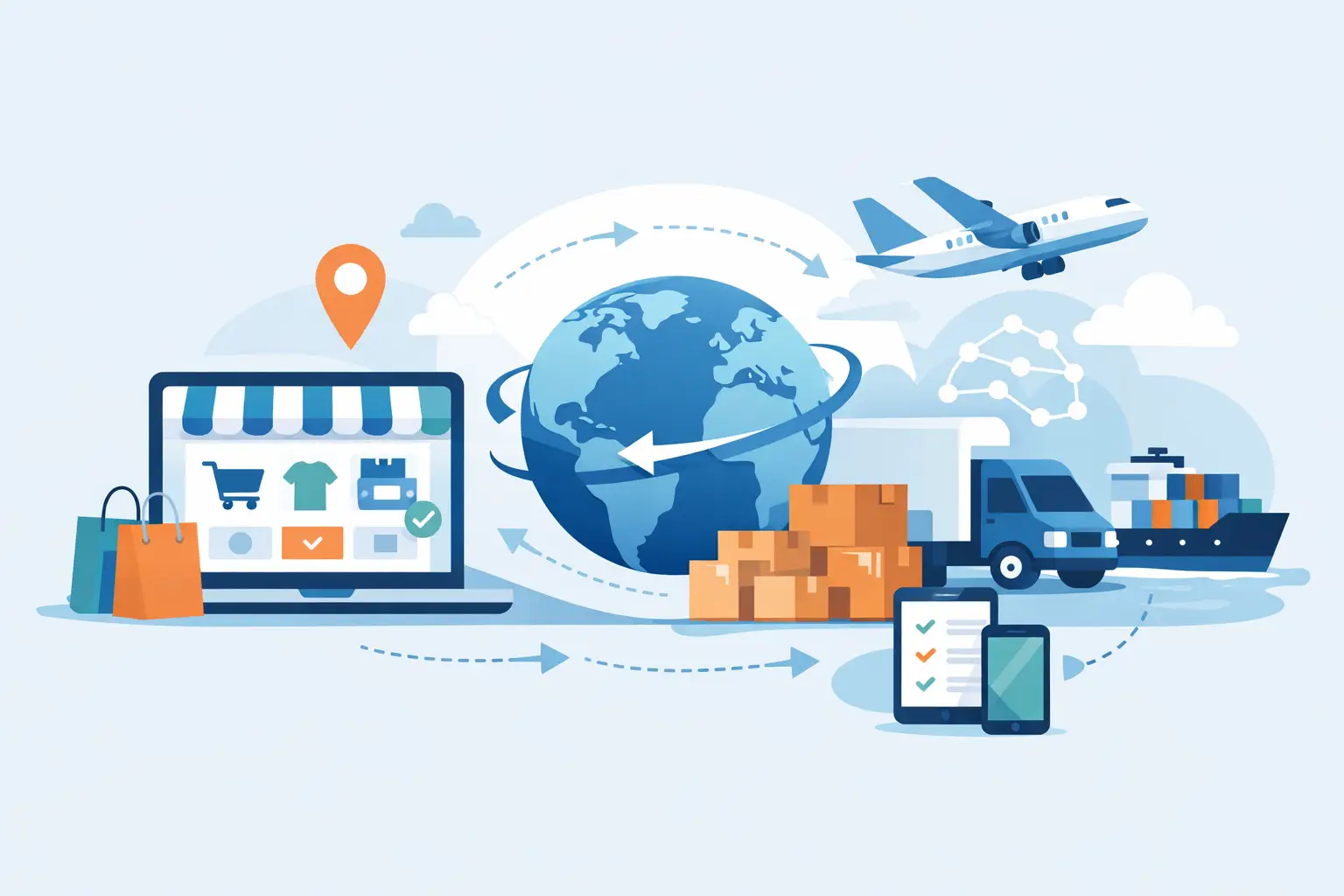
At a basic level, marketplace shipping integration connects your sales channels with your shipping and fulfillment workflow. Orders flow from the marketplace into one operational process, where shipment creation, label generation, tracking updates, and in some cases inventory handling can be managed with fewer manual steps.
That sounds simple, but the real value is operational. Instead of having staff re-enter order details, compare courier options one by one, or manually send tracking numbers to customers, the business can move from order confirmation to dispatch with much less friction. The result is not just time saved. It is fewer failed deliveries, fewer customer complaints, and less internal confusion.
The strongest integrations also help sellers work across more than one channel without building separate shipping routines for each one. If your business sells through marketplaces, social commerce, direct channels, or offline retail touchpoints, centralizing the shipping workflow becomes even more valuable.
Why manual shipping breaks as you grow
Many sellers start with manual fulfillment because it works well enough in the early stage. When daily volume is still manageable, copying addresses and preparing labels by hand may feel cheaper than setting up a better system. The problem is that manual processes rarely fail all at once. They become expensive slowly.
One missed unit in inventory can trigger overselling. One address typo can turn into a return, a replacement order, and a disappointed buyer. One delayed tracking update can create support tickets that take longer to resolve than the shipment itself. Multiply that by dozens or hundreds of orders a day, and shipping stops being an admin task. It becomes a growth bottleneck.
This is why marketplace shipping integration is often less about convenience and more about control. It gives sellers a clearer way to manage volume without needing to add headcount at the same pace as order growth.
The business case for marketplace shipping integration
Most merchants look at integration through the lens of speed, but speed is only one part of the equation. A better shipping setup also improves accuracy, visibility, and cost discipline.
When order data moves directly from the marketplace into your shipping process, your team spends less time on repetitive entry work. That reduces errors and shortens order processing time. Faster processing can help sellers meet marketplace service expectations more consistently, especially during campaigns, peak periods, or flash sale events.
There is also a customer experience benefit. Buyers expect clear tracking and reliable dispatch. They may not see your internal workflow, but they notice late shipments, incomplete updates, and delivery confusion immediately. Integration helps keep post-purchase communication more consistent, which matters because a smooth delivery experience often influences repeat orders as much as the product itself.
Then there is cost. Better shipping coordination can help businesses compare service options, reduce failed deliveries, and avoid the hidden expense of reactive customer service. The savings may not always show up as one dramatic line item, but over time they have a real effect on margin.
What to look for in a shipping setup
Not every integration delivers the same business value. Some are good for basic label creation but weak on operational visibility. Others are stronger for multi-channel sellers that need broader fulfillment support.
The right setup depends on your volume, channel mix, service promises, and internal resources. Still, there are a few practical capabilities that matter for most merchants.
Order sync and centralized processing
If your team still has to pull orders manually, the integration is not solving enough of the problem. Orders should move into a central workflow quickly and reliably, so your staff can process shipments from one place instead of jumping between platforms.
Label creation and tracking updates
Generating labels is only part of fulfillment. Tracking data also needs to move back into the sales channel or customer communication flow. If updates are delayed or incomplete, your support team will still carry the burden.
Courier flexibility
A single courier model may work for some products and locations, but many growing businesses need more choice. Weight, service level, cost, and destination all affect the best shipping decision. A rigid setup can limit your ability to optimize.
Exceptions handling
This is the part many sellers overlook. A shipping process should work well when things go wrong, not only when everything goes according to plan. Returns, address issues, failed delivery attempts, and customer collection requests all need a clear operational path.
Integration is not only a software decision
One common mistake is treating marketplace shipping integration as a pure technology purchase. In practice, it is an operating model decision. The software matters, but so do the physical handoff points, the courier network, the packaging process, and the people handling exceptions.
This is especially relevant for businesses that need more than one shipping function. Some merchants need drop-off support. Others need self-collection options for buyers, fulfillment support for inventory movement, or nearby retail touchpoints that reduce last-mile friction. In these cases, an integration works best when it connects digital order flow with real-world logistics access.
That is where a hybrid logistics model can make sense. A business may benefit from digital tools on the front end, while also relying on local service points for parcel handling, collection, packaging, and operational support. For many SMEs, that combination is more practical than trying to build every process internally.
When a marketplace shipping integration makes the biggest difference
The need becomes more urgent when a business is hitting one of a few common pressure points. The first is rising order volume with the same small team. The second is selling across multiple channels with no shared workflow. The third is frequent fulfillment errors that damage ratings or consume support time.
It also matters when your business model is changing. If you are adding fulfillment services, expanding into new product categories, offering customer collection, or working with retail partners, the shipping process has to support those changes. A narrow setup that only handles basic dispatch may hold you back.
For operators with physical stores or service counters, there is another angle. Shipping integration can create a stronger bridge between ecommerce operations and store-based parcel handling. That can improve convenience for customers while creating additional service value at the outlet level.
Trade-offs to consider before you implement
Not every business needs the most advanced system on day one. A simple integration may be enough if your order volume is stable and your process is straightforward. On the other hand, choosing a lightweight setup purely because it is easy can create more migration work later.
There is also a balance between flexibility and standardization. Too much customization can make daily operations harder to manage. Too little flexibility can force your team into workarounds. The best choice is usually the one that supports your current volume while leaving room for the next stage of growth.
Implementation also requires process discipline. If your inventory records are inconsistent or your packaging flow is unclear, integration alone will not fix that. Good systems improve good operations. They do not replace them.
A practical path forward for sellers and operators
If you are evaluating marketplace shipping integration, start by mapping your current shipping workflow from order receipt to final delivery or collection. Look at where time is being lost, where errors are happening, and where customer questions are most common. Those points usually show where integration will create the clearest return.
Next, assess whether your business only needs shipping automation or a broader fulfillment partner. Some merchants need a tool. Others need a support model that includes parcel handling, local access points, buyer collection, packaging services, and operational backup during peak periods. Knowing the difference saves time and avoids choosing too narrow a solution.
For businesses that want both digital coordination and physical logistics support, a partner such as iExpress can be relevant because the value is not limited to system connectivity alone. The real advantage is the ability to connect marketplace orders with accessible parcel services, fulfillment support, and retail-based logistics touchpoints in one working ecosystem.
Growth puts pressure on the parts of a business that seemed manageable at smaller scale. Shipping is usually one of the first areas to show strain. If your team is spending more time managing parcels than moving the business forward, that is a sign the process needs an upgrade, not more patchwork. The right integration should make fulfillment easier to run, easier to scale, and easier for your customers to trust.