
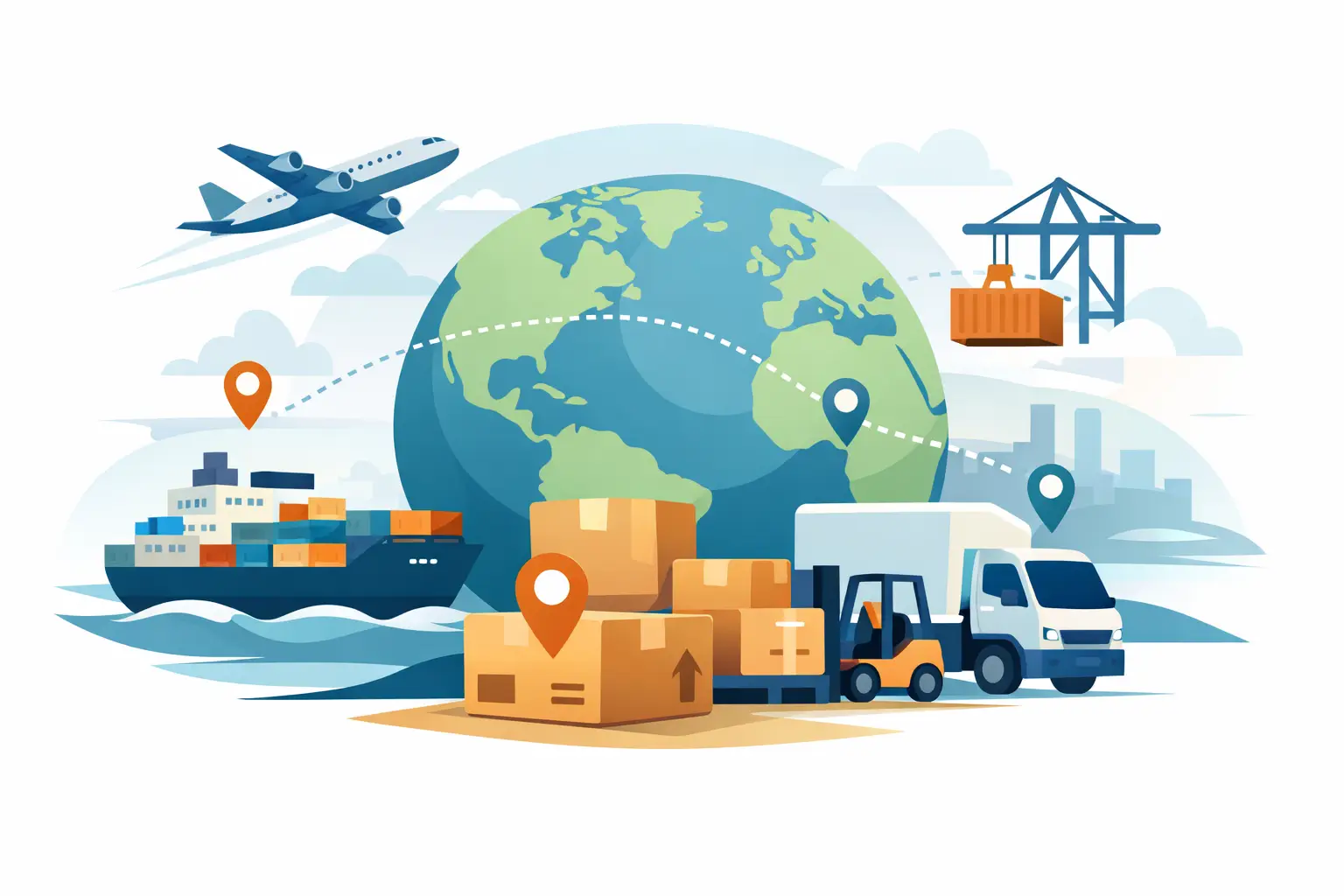
One delayed parcel can turn a profitable cross-border sale into a refund, a customer complaint, and hours of back-and-forth with carriers. That is why an international shipping guide matters for SMEs, online sellers, and growing brands. If you are shipping outside your home market, the real challenge is not just moving a parcel from point A to point B. It is managing paperwork, cost control, delivery expectations, and customer experience at the same time.
What an international shipping guide should actually help you do
For most businesses, international shipping is not a one-time task. It becomes part of day-to-day operations. A useful guide should help you quote accurately, pack correctly, choose the right service level, and reduce delays at customs.
It should also help you make practical decisions based on your business model. A fashion seller shipping low-cost items will not make the same choices as a B2B supplier sending higher-value goods. The right shipping setup depends on your order value, margins, product type, destination country, and how much delivery speed really affects conversion.
Start with the shipment profile, not the courier rate
Many businesses compare international shipping by looking at courier prices first. That seems logical, but it often leads to the wrong decision. A cheaper rate can become expensive if the parcel is delayed, returned, reclassified by customs, or billed with unexpected surcharges.
Start by defining your shipment profile. Look at the average parcel weight, dimensions, item category, declared value, destination mix, and expected delivery speed. If you send small parcels to nearby countries every day, your priorities may be cost consistency and easy label generation. If you ship fragile or regulated items less often, documentation accuracy and handling quality may matter more.
This is also where volume matters. Businesses with regular order flow can often build a better process through a fulfillment and logistics partner instead of handling every shipment manually. A tech-enabled workflow saves time, but it also reduces avoidable errors that usually show up later as customs issues or customer complaints.
The documents that cause the most problems
International shipping problems often begin before the parcel leaves your hands. Missing or inaccurate documents are one of the most common reasons for delay.
At minimum, most international shipments need a commercial invoice with clear item descriptions, quantities, values, and the shipper and receiver details. The wording on the item description matters more than many sellers realize. "Accessories" or "samples" is usually too vague. Customs authorities want to know what the goods actually are.
You may also need a packing list, export declaration, import permits, or product-specific compliance documents depending on what you ship and where it is going. This is where businesses get caught by the phrase "it depends." Different countries treat the same product differently. A beauty item, food product, electronic device, or printed material may require extra scrutiny even if it ships easily in another market.
If your team ships regularly, standardizing invoice formats and product descriptions is one of the simplest ways to reduce risk. Consistency helps your operations team move faster and gives customs fewer reasons to question the shipment.
Duties, taxes, and the cost question customers care about
Customers rarely complain about customs rules themselves. They complain when charges appear late and unexpectedly. That is why landed cost visibility matters.
International shipping costs usually include more than transportation. There can be duties, taxes, fuel surcharges, remote area fees, and handling charges. If your checkout or sales quote only shows the freight charge, the final delivery experience may still feel expensive to the customer.
There is no single rule that works for every business. Some sellers prefer to keep upfront prices low and let the receiver pay import charges on arrival. Others absorb those costs into the selling price for a cleaner buying experience. The best choice depends on your average order value, competition, and how sensitive your customers are to surprise fees.
For repeat-purchase businesses, transparency usually wins. A customer may accept a higher total price if the process feels predictable. Hidden costs hurt trust much more than clearly stated costs.
Packaging is not just protection
In any international shipping guide, packaging deserves more attention than it usually gets. Good packaging protects the item, but it also affects shipping cost, customs handling, and return risk.
Oversized packaging can raise charges through dimensional weight, even when the item itself is light. Weak packaging can lead to damage claims that are difficult to recover. Poor labeling can slow down handoffs between carriers, customs, and last-mile delivery teams.
The right packaging approach balances protection with efficiency. Use the smallest box or mailer that still gives the item enough support. Keep labels clear and durable. If you ship products that are easily damaged, tamper-sensitive, or moisture-sensitive, build that protection into your standard packing process rather than relying on ad hoc fixes at packing time.
For businesses with growing order volume, packaging standardization is one of the easiest ways to improve margin. Fewer box sizes, clearer pack-out rules, and repeatable material usage make quoting and warehouse execution much easier.
Choosing service levels in this international shipping guide
Not every parcel needs express service, and not every economy option is worth the savings. The right service level depends on the promise you make to the customer.
If a buyer expects delivery in three to five business days, economy shipping that regularly stretches beyond a week will create support tickets and refund pressure. On the other hand, paying premium rates for low-urgency items can eat into margin without improving customer satisfaction.
A practical approach is to match service levels to product category and customer expectation. High-value, urgent, or time-sensitive orders may justify faster services with stronger tracking. Lower-value replenishment orders may work well with slower options if the delivery window is clearly communicated.
This is where operational visibility matters. Businesses need more than a booking option. They need tracking updates, exception handling, and a clear process when delivery attempts fail or customs asks for more information. Reliable logistics is not only about movement. It is also about how quickly issues are identified and resolved.
Customs delays are not always random
From the customer side, customs can look unpredictable. From the operator side, there are usually patterns. Delays often come from incorrect values, vague descriptions, mismatched documentation, restricted goods, or missing receiver details.
That means many customs issues are preventable. Review your top shipping destinations and identify the products that trigger extra checks. Keep a record of common exceptions. If one category regularly requires additional documents, build that step into your workflow instead of treating it as a surprise every time.
It also helps to separate true customs delays from carrier delays. The solution is different in each case. If customs is holding the parcel, document quality and compliance are the issue. If linehaul or final-mile delivery is the problem, service selection and network coverage may need attention.
Returns and failed deliveries need a plan before you ship
Cross-border returns are often expensive, and for lower-value goods they may not make financial sense at all. Yet many sellers only think about returns after a delivery problem happens.
Before you expand internationally, decide what happens if a parcel is refused, undeliverable, or delayed beyond the promised window. In some cases, return-to-origin costs can exceed the value of the goods. In others, reshipment may be the better customer service decision.
Your policy should reflect commercial reality. If the product is low-cost and the market is far away, a refund without return may be more practical. If the item is high-value, return controls and restocking steps become much more important. There is no perfect answer, but there should be a clear one.
Why growing sellers benefit from operational support
As order volume increases, international shipping stops being a simple courier task and becomes an operations function. That shift is where many SMEs feel the strain. Staff spend more time creating documents, answering tracking questions, packing inconsistently, and correcting shipping errors.
A logistics partner with digital tools and practical support can reduce that pressure. For businesses expanding into cross-border sales, that means better control over fulfillment, easier parcel handling, and more dependable day-to-day execution. For retailers and service points, it can also create added value by offering shipping and collection support closer to the customer.
This is where a business-friendly network model matters. A provider like iExpress is built around practical access points and operational convenience, which is useful for merchants that need shipping support without adding unnecessary complexity to their workflow.
Common mistakes that cost more than the shipping fee
The most expensive international shipping mistakes are rarely dramatic. They are usually small and repeated. Underdeclaring value to save cost can trigger customs problems. Using generic product descriptions can slow clearance. Choosing a service based only on price can raise support costs later. Promising delivery dates without a margin for customs can damage trust.
The better approach is simple: quote honestly, document clearly, pack consistently, and choose service levels that fit the promise you make. International shipping rewards businesses that treat logistics as part of the customer experience, not just a back-end task.
If you are planning to grow beyond your domestic market, start by making your shipping process easier to repeat, easier to track, and easier to explain to customers. That discipline does more for long-term sales than chasing the lowest rate on a single parcel.